Why Security Awareness Training Is No Longer Optional for Small Businesses
Small businesses face the same cyber threats as large enterprises but often have fewer resources to recover from an incident. Security awareness training helps employees recognize phishing attempts, social engineering attacks, and other cybersecurity threats before they become costly business problems.
For organizations in regulated and compliance-driven industries, security awareness training is more than a cybersecurity best practice. It is an important component of risk management, compliance readiness, and business resilience.
What Is Security Awareness Training?
Security awareness training is an ongoing educational program designed to teach employees how to identify, avoid, and report cybersecurity threats.
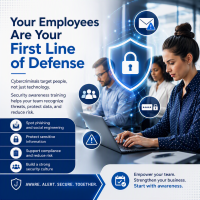
Effective security awareness training helps employees:
- Identify phishing emails
- Recognize social engineering tactics
- Protect passwords and sensitive information
- Avoid malicious websites and downloads
- Understand company security policies
- Report suspicious activity quickly
The goal is simple: transform employees from potential targets into active participants in protecting the organization.
Why Is Security Awareness Training Important?
Cybercriminals increasingly target people rather than technology.
Instead of trying to break through security systems, attackers often attempt to trick employees into:
- Clicking malicious links
- Opening infected attachments
- Sharing credentials
- Approving fraudulent payments
- Revealing confidential business information
A single mistake can lead to operational disruption, financial loss, reputational damage, or compliance violations.
Security awareness training helps reduce these risks by giving employees the knowledge and confidence to recognize threats before they become incidents.
What Are the Most Common Cybersecurity Threats Employees Face?
Employees encounter cyber threats every day, often without realizing it.
Common threats include:
Phishing Emails
Fraudulent emails designed to trick recipients into sharing information or clicking malicious links.
Business Email Compromise (BEC)
Attackers impersonate executives, vendors, or trusted contacts to request payments or sensitive information.
Social Engineering
Cybercriminals manipulate individuals into revealing confidential information through phone calls, emails, text messages, or online interactions.
Credential Theft
Attackers attempt to steal usernames and passwords to gain access to systems and data.
AI-Powered Scams
Advancements in artificial intelligence are making fraudulent messages more convincing and difficult to identify.
How Does Security Awareness Training Support Compliance?
Many compliance frameworks and cyber insurance providers expect organizations to provide employee security education as part of their cybersecurity program.
Examples may include:
- HIPAA
- CMMC
- PCI-DSS
- FTC Safeguards Rule
- Cyber insurance requirements
- Industry-specific security frameworks
While requirements vary, training demonstrates an organization’s commitment to protecting sensitive information and reducing business risk.
What Does an Effective Security Awareness Program Include?
The most successful programs focus on continuous improvement rather than annual compliance checkboxes.
Key components include:
Ongoing Education
Short, frequent training sessions help employees retain information and stay current with evolving threats.
Phishing Simulations
Real-world exercises help employees practice recognizing suspicious messages.
Security Culture
Leadership participation reinforces that security is everyone’s responsibility.
Clear Communication
Training should be presented in practical, easy-to-understand language rather than technical jargon.
5 Signs Your Organization Needs Better Security Awareness Training
If any of the following sound familiar, your organization may be at increased risk:
- Employees rarely report suspicious emails.
- Password-sharing still occurs.
- Multifactor authentication adoption is inconsistent.
- Security training happens only once per year.
- Senior leadership is not actively participating in security initiatives.
Organizations that proactively address these issues are generally better prepared to prevent and respond to cyber incidents.
Frequently Asked Questions About Security Awareness Training
How often should employees receive security awareness training?
Security awareness training should be ongoing throughout the year. Cyber threats continuously evolve, and regular training helps keep employees informed about new attack methods.
Is annual security training enough?
For most organizations, annual training alone is not sufficient. Frequent learning opportunities and practical exercises typically produce stronger results.
Does security awareness training reduce phishing risks?
Yes. Employees who understand how phishing attacks work are generally more likely to identify suspicious messages and report them before damage occurs.
Is security awareness training required for compliance?
Many regulatory frameworks and cyber insurance programs expect organizations to demonstrate employee cybersecurity education as part of their broader risk management efforts.
Can small businesses benefit from security awareness training?
Absolutely. Small businesses are frequent targets because attackers often view them as easier targets than larger enterprises.
The Bottom Line
Technology alone cannot protect an organization from modern cyber threats.
Employees remain one of the most important layers of defense.
Organizations that invest in ongoing security awareness training can reduce risk, strengthen compliance efforts, improve incident reporting, and build a stronger culture of security.
Is Your Team Prepared for Today’s Cyber Threats?
Most organizations don’t discover gaps in employee awareness until after an incident occurs.
A proactive assessment can help identify opportunities to strengthen training, support compliance objectives, and reduce organizational risk before a costly mistake happens.
Schedule a complimentary Security Awareness Assessment to evaluate your current approach and build a stronger human firewall. Contact us here