What Is Cybersecurity, and Is It Included in Managed IT Services?
October is Cybersecurity Awareness Month, making it a good time to step back and answer a question many business leaders assume they already understand:
What is cybersecurity?
- People who understand their role in protecting the organization
- Processes that help the business prepare for and respond to risk
- Technology that helps prevent, detect, and contain threats
Cybersecurity in one sentence: Cybersecurity helps protect your business from digital threats that could interrupt operations, expose sensitive information, create financial loss, or damage trust.
What does cybersecurity protect?
Your employees
Your accounts and identities
Your business data
- Is available only to authorized people
- Remains accurate and trustworthy
- Can be accessed when the business needs it
Your devices, applications, and networks
Your business operations
Is cybersecurity the same as IT support?
Managed IT services commonly focus on:
- Supporting employees
- Troubleshooting technical problems
- Maintaining computers and servers
- Managing user accounts
- Administering Microsoft 365
- Installing software updates
- Monitoring system availability
- Maintaining networks and business applications
Cybersecurity services commonly focus on:
- Protecting user identities
- Monitoring for suspicious activity
- Securing email and cloud services
- Managing vulnerabilities
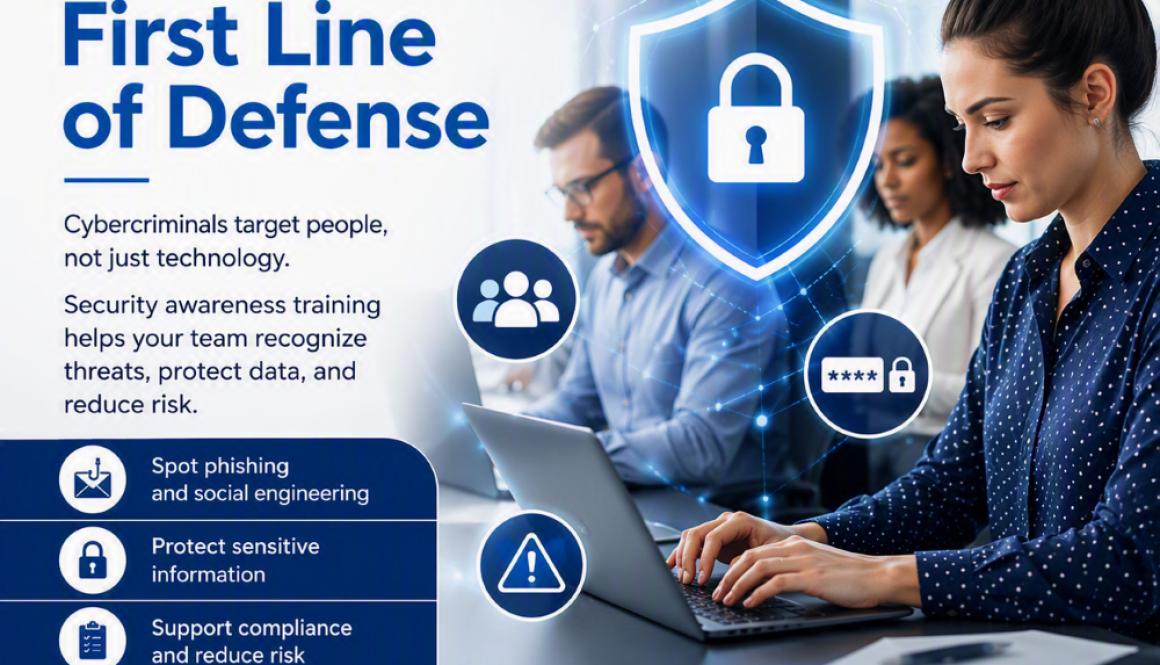
- Training employees to recognize scams
- Controlling access to sensitive information
- Preparing an incident response plan
- Assessing cybersecurity risk
- Supporting security and compliance requirements
- Responding to and recovering from security incidents
Managed IT helps keep your technology working. Cybersecurity helps protect the business risks connected to that technology.
Is cybersecurity included in managed IT services?
- Software patching
- Antivirus administration
- Firewall management
- User account administration
- Backup monitoring
- Basic device management
- Advanced endpoint detection and response
- Security operations monitoring
- Managed detection and response
- Email threat protection
- Identity and access management
- Multi-factor authentication
- Security awareness training
- Phishing simulations
- Vulnerability assessments
- Risk assessments
- Incident response planning
- Compliance-focused security controls
- Vendor risk reviews
- Executive security reporting
- Which protections are currently included?
- Which systems, users, and locations are covered?
- Who monitors security alerts?
- What happens when suspicious activity is detected?
- Who responds if an incident occurs?
- How are security risks communicated to leadership?
- Which services require a separate agreement or subscription?
Why isn’t comprehensive cybersecurity automatically included?
- A convincing email rather than malicious software
- A stolen username and password
- A fraudulent payment request
- A compromised vendor account
- An employee approving an unexpected sign-in
- An attacker using a legitimate account
- A phone call designed to pressure an employee into taking action
Why is cybersecurity important for small and mid-sized businesses?
- Interrupted business operations
- Loss of access to systems or data
- Fraudulent payments
- Recovery expenses
- Compliance concerns
- Legal or contractual obligations
- Damaged customer confidence
- Lost productivity
What does a practical cybersecurity program include?
People
- Security awareness training
- Phishing simulations
- Clear reporting procedures
- Executive awareness
- Role-based training
- Payment verification procedures
Processes
- Incident response planning
- User onboarding and offboarding
- Access reviews
- Vendor risk management
- Data handling procedures
- Backup testing
- Business continuity planning
- Payment change verification
Technology
- Multi-factor authentication
- Endpoint protection
- Email security
- Secure backups
- Identity monitoring
- Device management
- Access controls
- Security logging and monitoring
- Vulnerability management
- Encryption
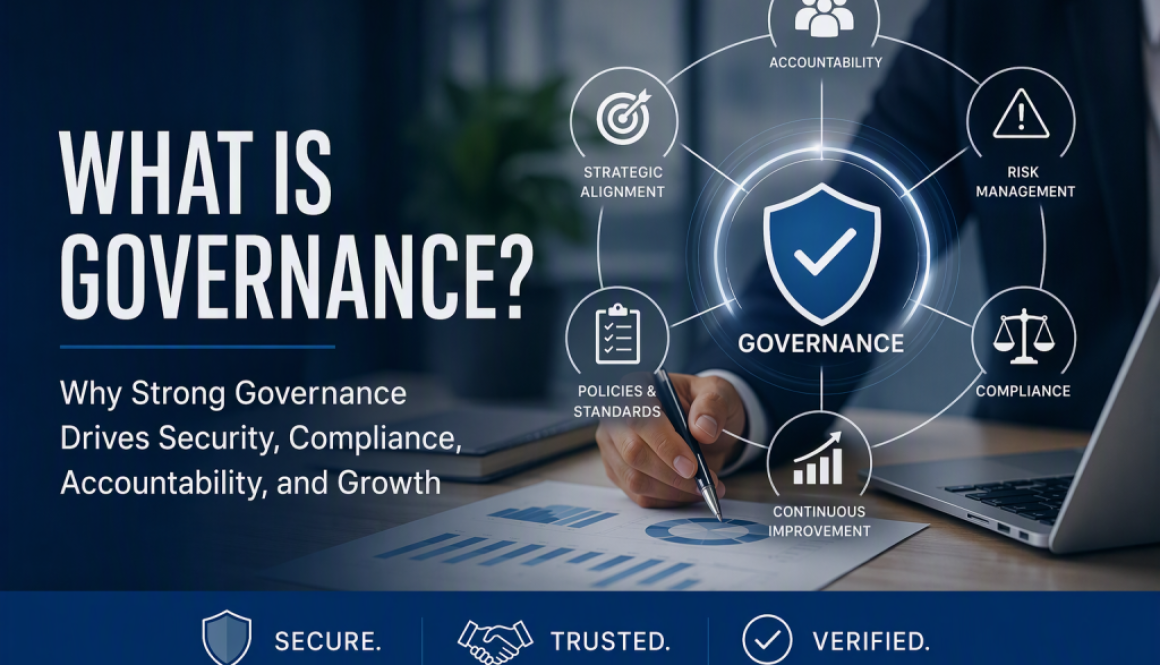
Governance
- Cybersecurity risk assessments
- Security policies
- Defined responsibilities
- Compliance alignment
- Executive reporting
- Cyber insurance reviews
- Third-party risk oversight
- Regular review of security priorities
What are the most common cybersecurity scams?
Phishing
Business email compromise
- A wire transfer
- A change to payment instructions
- A copy of sensitive information
- The purchase of gift cards
- An urgent exception to an established process
Smishing
Vishing
Quishing
Ransomware
Vendor payment fraud
AI-assisted impersonation
Multi-factor authentication fatigue
What should business leaders ask about cybersecurity?
- What information and systems are most important to our operations?
- Who has access to sensitive information?
- Is multi-factor authentication required for important accounts?
- How do we protect business email?
- Are security alerts actively monitored?
- How quickly would someone investigate suspicious activity?
- Are our backups protected and tested?
- Do employees know how to report a suspicious message?
- Do we independently verify payment and banking changes?
- Do we have an incident response plan?
- When was our last cybersecurity risk assessment?
- Which cybersecurity responsibilities belong to us, our IT provider, and our other vendors?
The bottom line
Not sure what your IT services include?
- Which protections are already in place
- What your managed services agreement includes
- Where responsibilities may be unclear
- Which risks deserve attention
- What practical next steps align with your business
Cybersecurity is the practice of protecting your business from digital threats that could affect operations, data, finances, compliance responsibilities, or customer trust. It combines appropriate technology, documented processes, and employee awareness to help prevent incidents, detect suspicious activity, respond effectively, and support recovery.
No. IT support focuses primarily on keeping technology operational by maintaining systems, resolving technical issues, and supporting users. Cybersecurity focuses on identifying and reducing risks to people, systems, data, and business operations. The two disciplines work closely together, but they have different objectives and responsibilities.
Some managed IT services include foundational security measures such as patching, antivirus administration, firewall management, backups, or user account support. Comprehensive cybersecurity may require additional services, including security monitoring, employee training, identity protection, vulnerability management, incident response planning, and risk assessments. Review your agreement so you know exactly what is included.
Cybersecurity is important for small and mid-sized businesses because a successful incident can interrupt operations, expose sensitive information, redirect payments, create recovery costs, and damage customer trust. A practical cybersecurity program helps the organization understand its risks, strengthen important protections, and improve its ability to respond and recover.
Cybersecurity helps protect employee accounts, business email, customer information, financial records, cloud applications, devices, networks, backups, and critical business processes. Ultimately, it protects the organization’s ability to operate, serve customers, meet its obligations, and maintain trust.
Common threats include phishing, business email compromise, ransomware, credential theft, text-message scams, phone scams, malicious QR codes, vendor payment fraud, and AI-assisted impersonation. Many of these attacks target people and business processes rather than relying only on malicious software.
No. Antivirus remains a useful layer of protection, but it cannot address every cybersecurity risk. Phishing, stolen credentials, business email compromise, fraudulent payment requests, and compromised cloud accounts may not involve traditional computer viruses. Most organizations need multiple safeguards, including employee training, access controls, multi-factor authentication, backups, monitoring, and response planning.
The three traditional goals of cybersecurity are confidentiality, integrity, and availability. Confidentiality means information is accessible only to authorized people. Integrity means information remains accurate and trustworthy. Availability means systems and data are accessible when the organization needs them.
Cybersecurity risk should be reviewed regularly because technology, business operations, vendors, staffing, regulations, and threats change. Formal assessments can help leadership understand current risks and priorities, while ongoing monitoring and periodic access, policy, backup, and control reviews help the organization respond to changes between assessments.
A business can improve cybersecurity by first understanding its most important systems, information, and risks. Practical next steps may include requiring multi-factor authentication, training employees, maintaining protected backups, reviewing user access, securing business email, patching systems, monitoring for suspicious activity, and creating an incident response plan.
Cybersecurity focuses on protecting digital systems, networks, devices, applications, and data from cyber threats. Information security has a broader scope and considers the protection of information in digital, printed, verbal, and other forms. The two disciplines overlap because both help preserve the confidentiality, integrity, and availability of information.
Microsoft 365 includes security features, but the protections available depend on the organization’s licensing, configuration, and management approach. Businesses should not assume that purchasing a subscription creates a complete cybersecurity program. Identity settings, access controls, monitoring, email protections, user training, and response responsibilities still need to be evaluated and managed.
A cybersecurity risk assessment is a structured review of the systems, information, threats, vulnerabilities, safeguards, and business consequences that shape an organization’s cybersecurity risk. It helps leadership understand areas of strength, identify potential gaps, prioritize improvements, and make decisions that reflect the organization’s business needs and risk tolerance.